
Winter turns five European cities into the best versions of themselves. Lights go up over grand avenues, hotel lobbies fill with towering trees and get all dressed up for the season, centuries-old markets open in the shadow of palaces and cathedrals, and each city puts its own stamp on the season. Here's what each one has to offer, from late November through the first week of January.
Quick Take
London: Hyde Park Winter Wonderland (Nov – Jan), riverside markets, and a Christmas tree gifted by Norway every year since 1947.
Paris: The Champs-Élysées lit nightly from mid-November through early January, plus department store window displays, Christmas markets and light festivals across the city.
Munich: The Marienplatz Christkindlmarkt (Nov to Dec 24), one of Europe's oldest, alongside the Tollwood Winter Festival and smaller neighborhood markets.
Vienna: Christmas markets at Rathausplatz (runs into Jan) and Schönbrunn Palace (goes until Dec but the ice rink runs until Jan), plus one of Europe's largest New Year's Eve street parties.
Madrid: A season that peaks after Christmas Day, with the Cabalgata de Reyes parade on January 5 and Día de Reyes on January 6.
London
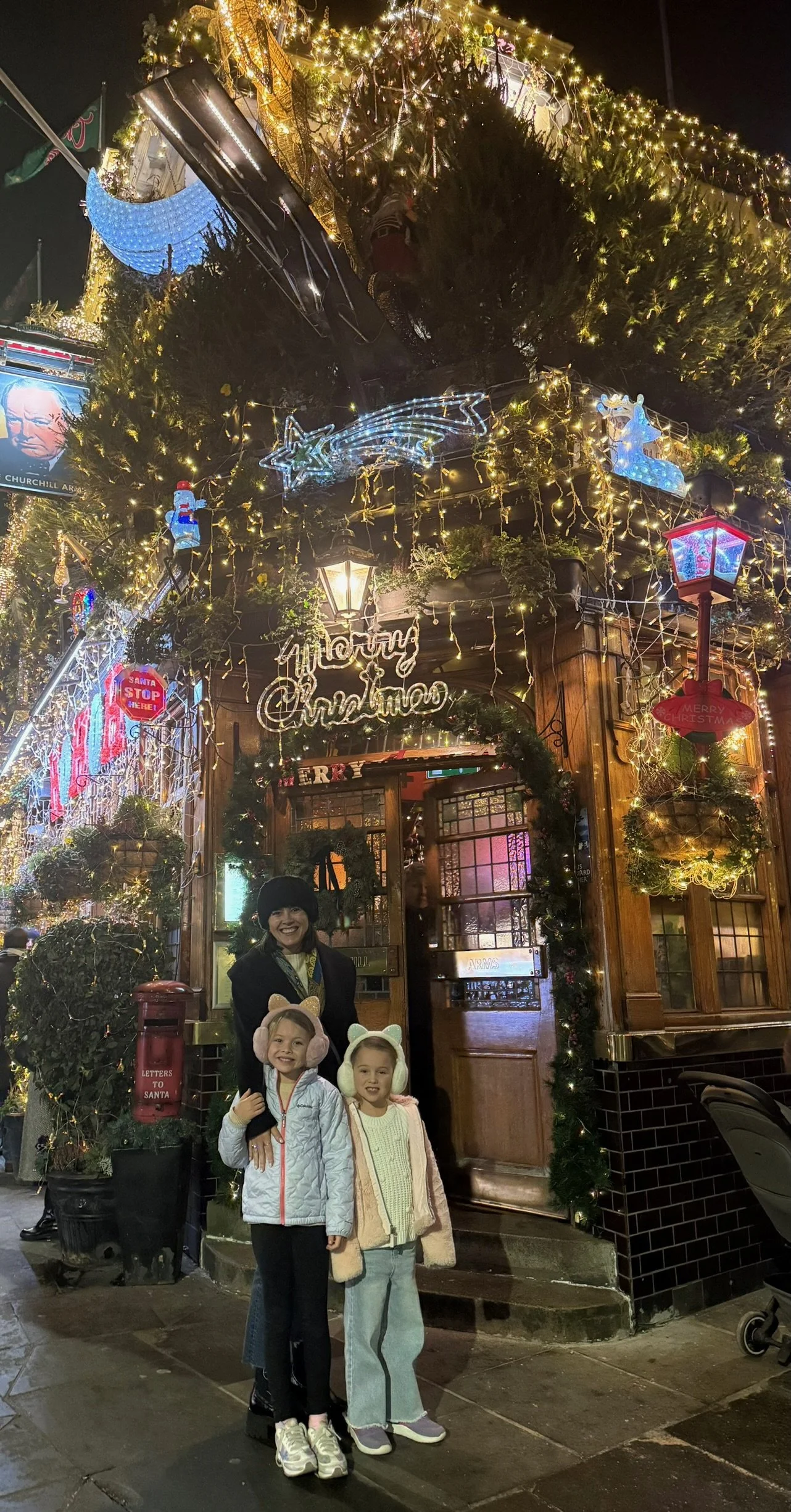
London leans into Christmas harder than most cities, making it a great option for a family holiday getaway and Hyde Park is where that shows up most. Winter Wonderland spreads around 150 rides and attractions across the park, along with an ice rink, a Bavarian-style village, and its own Christmas market. It's free to walk through, with rides and attractions ticketed separately.
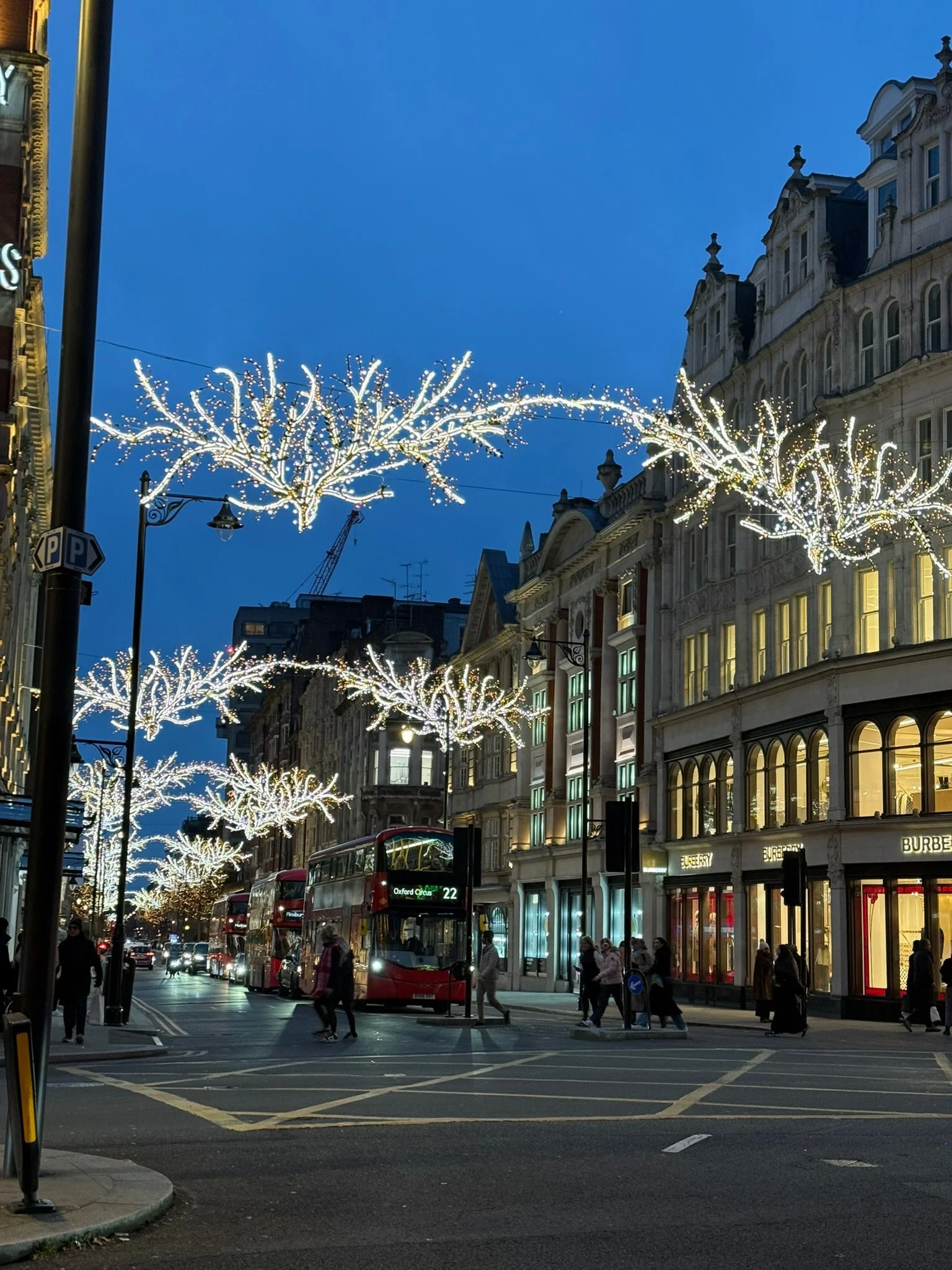
Along the Thames, the Southbank Centre's Winter Market lines the Queen's Walk with alpine-style chalets, mulled wine, and views of the London Eye, running from early November into early January. Somerset House turns its 18th-century courtyard into one of the city's best-loved ice rinks each winter, and Regent Street and Oxford Street both do their own elaborate light displays, worth a slow walk after dark.
The nicest story belongs to Trafalgar Square. Every year since 1947, the city of Oslo has sent London a Norwegian spruce as thanks for Britain's support during the Second World War, when Norway's king and government were based in London in exile. The tree is felled in a joint ceremony outside Oslo each November, shipped over by sea, and lit in early December in a public ceremony with carol singing. It stays up until just before Twelfth Night, quietly marking the whole span of the season.
Paris
Paris keeps its Christmas décor mostly outdoors and mostly free to see. The Champs-Élysées gets its full seasonal treatment from mid-November through the first days of January, with around a million lights strung through the trees from Place de l'Étoile to Place de la Concorde. The display switches on each evening around 5 p.m. and runs until midnight, later on Friday and Saturday nights, and stays lit all night on Christmas Eve and New Year's Eve.
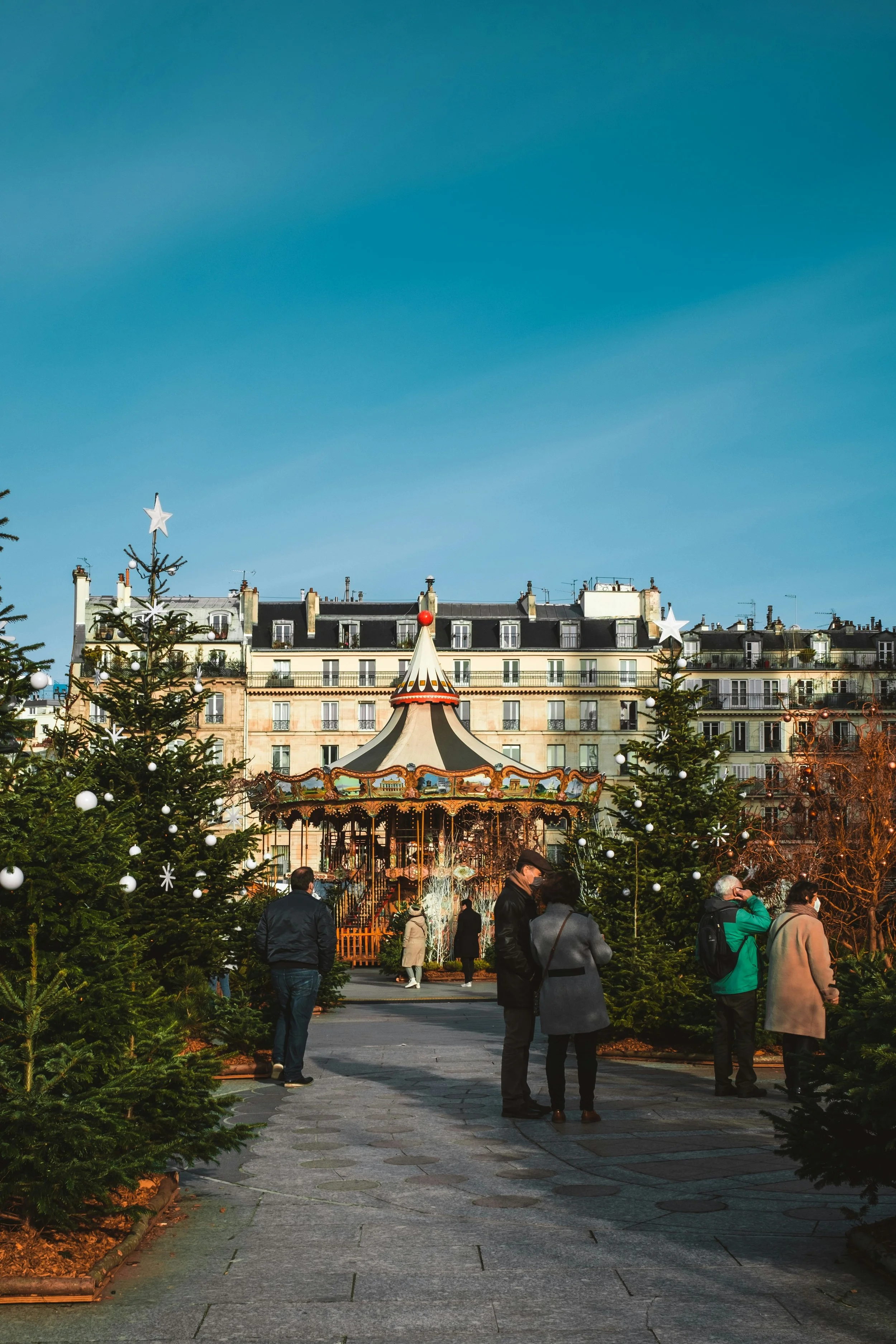
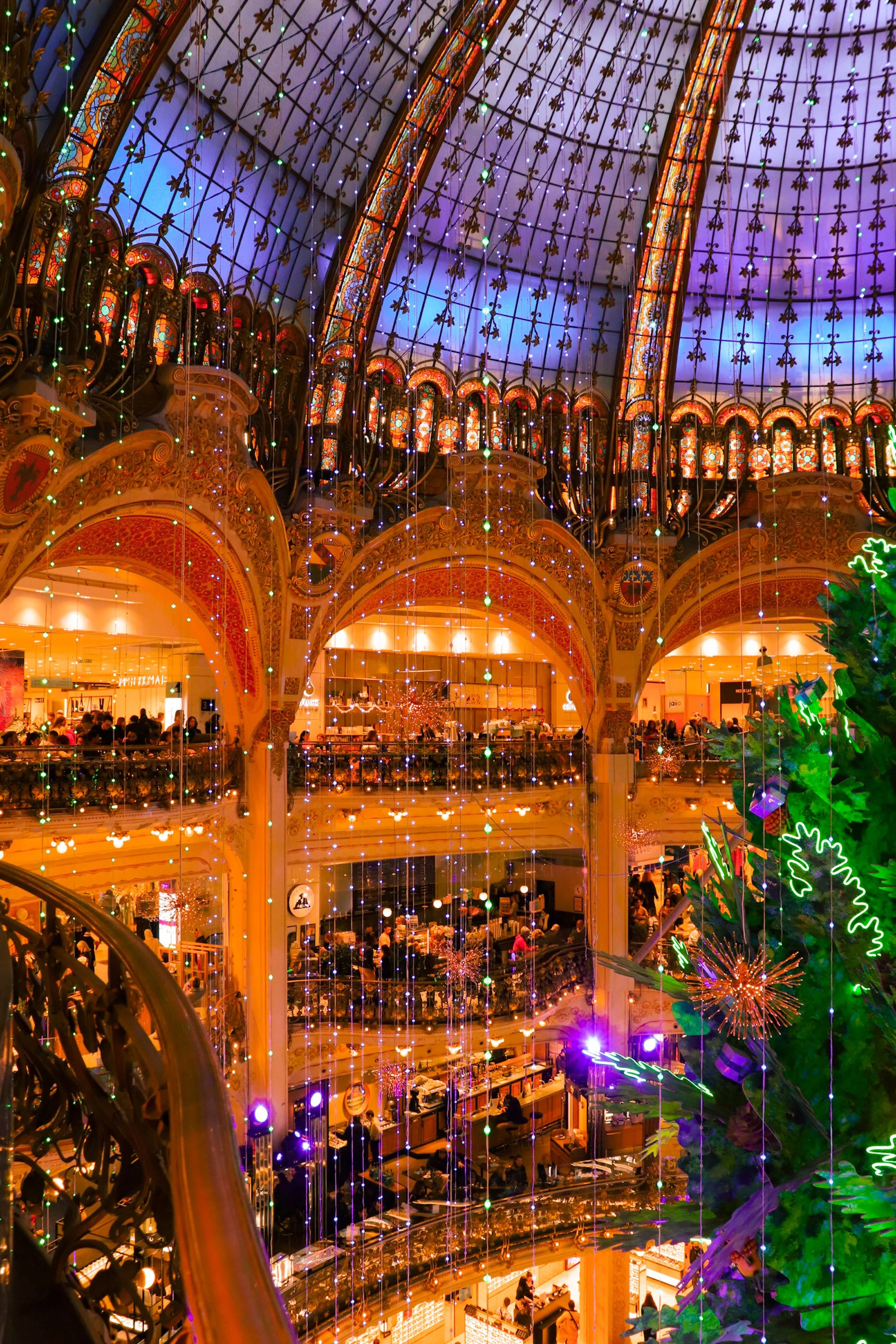
Department stores compete just as hard. Galeries Lafayette and Printemps Haussmann unveil animated window displays each November, a Parisian tradition that draws crowds of families most evenings through the season. Place Vendôme gets its own lighting, and the Jardin des Plantes runs a separate light festival built around natural phenomena, a quieter alternative to the crowds along the Champs-Élysées. On New Year's Eve, the Arc de Triomphe becomes the backdrop for the city's fireworks and a projected light show, visible from much of the surrounding avenues.
Munich
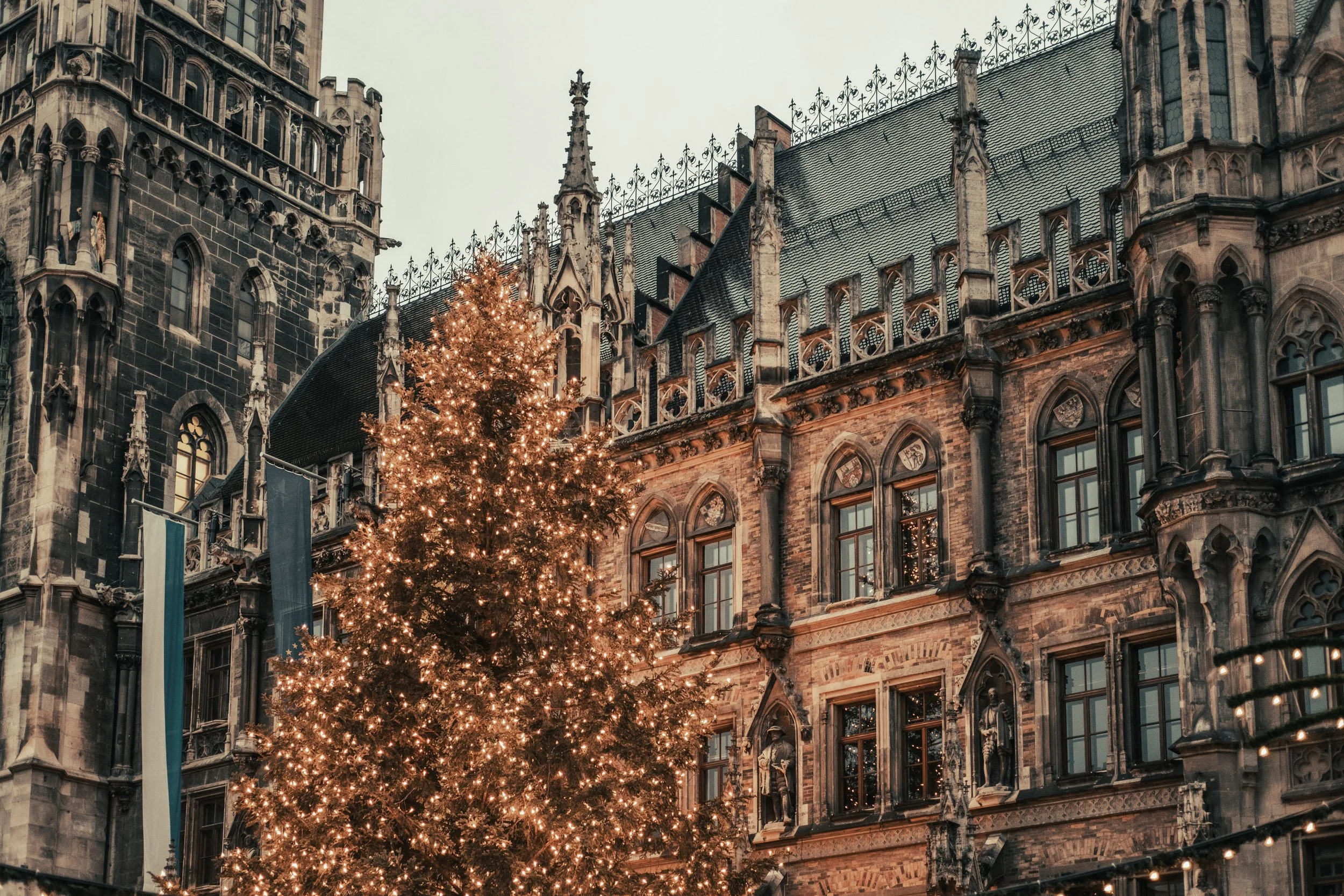
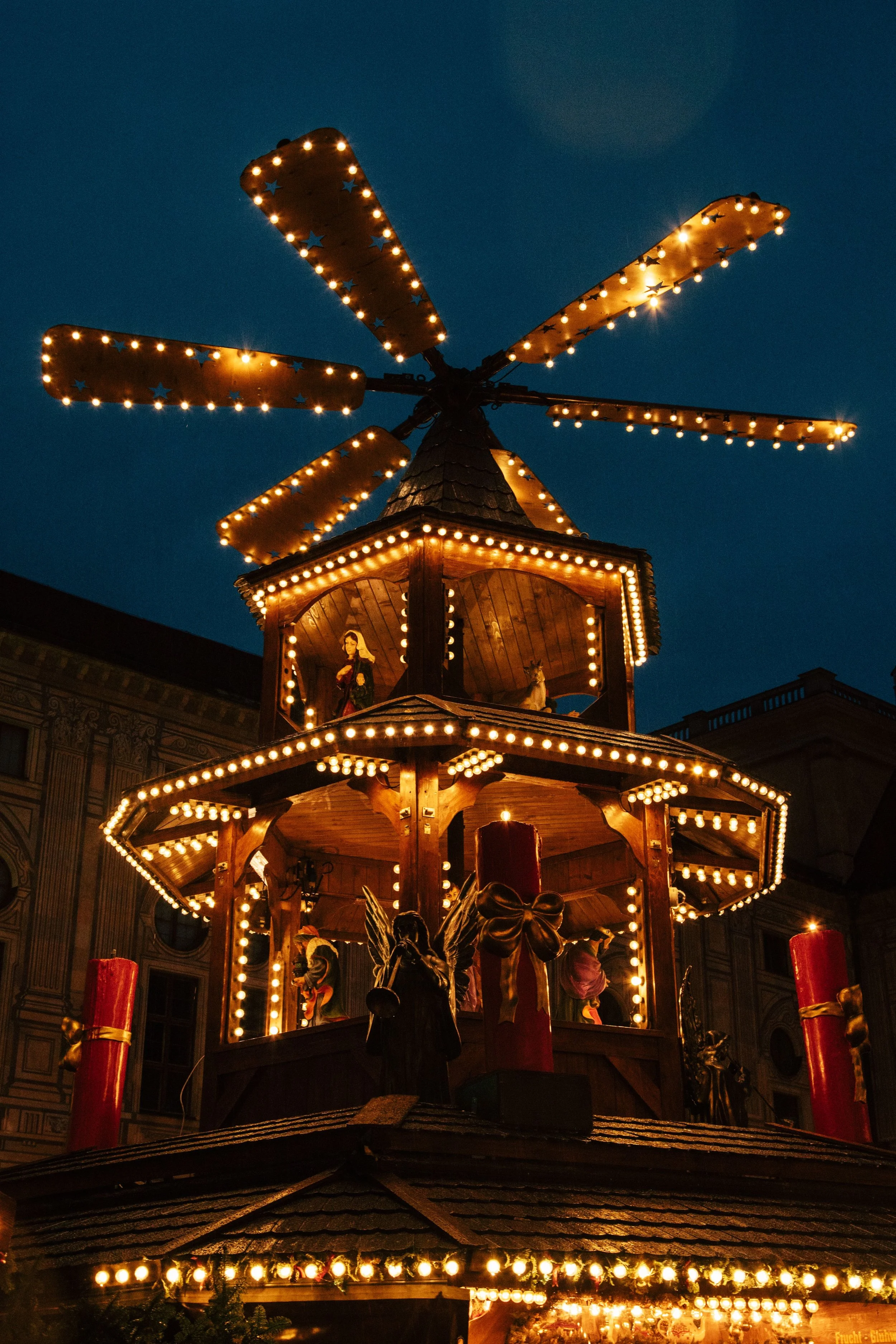
Munich's Christkindlmarkt at Marienplatz has run in some form since the 14th century, which makes it one of the oldest Christmas markets in Europe. The 2026 edition runs November 20 through December 24, filling the square and its side streets with more than 130 wooden stalls beneath a Christmas tree cut each year from the Bavarian forest. Live Advent music plays from the town hall balcony most evenings, Sunday through Thursday and in mid-December, the market's Krampus Run brings costumed performers through the city center, one of Bavaria's older winter customs and one that draws tens of thousands of onlookers.
Just outside the old town, the Tollwood Winter Festival takes over Theresienwiese from late November through late December with a different, more alternative atmosphere: food stalls, live music, and craft markets that lean less traditional than Marienplatz. Smaller neighborhood markets, including one near Rindermarkt known for nativity scenes and handmade crafts, are worth a stop for anyone who wants a quieter version of the same season.
Vienna
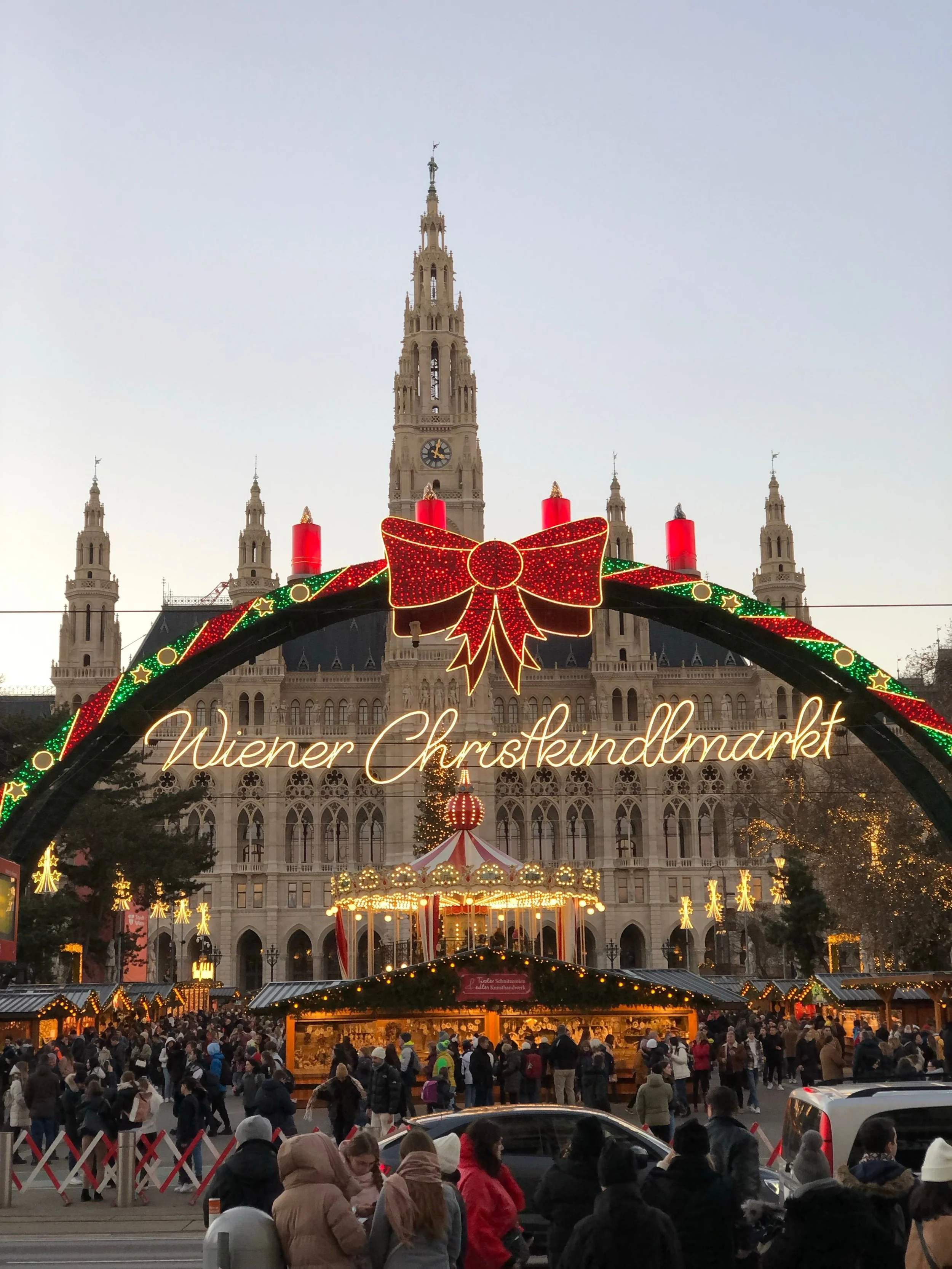
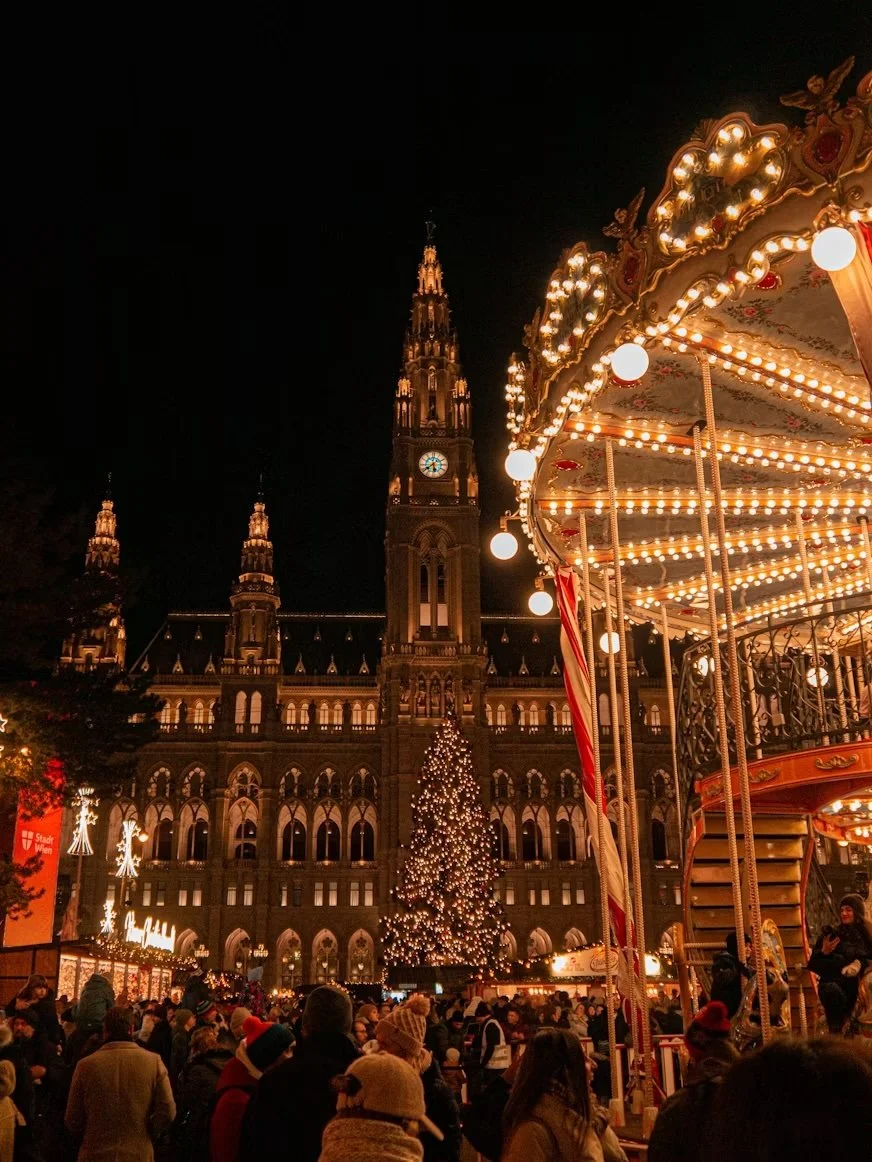
Vienna's Christmas markets are some of the oldest and most numerous in Europe, with more than 20 running across the city each winter. The largest, at Rathausplatz, opens in mid-November and runs through the end of December, with an ice rink that stays open into early January. Schönbrunn Palace hosts its own market against the backdrop of the imperial residence, opening in early November and continuing, in a scaled-back New Year's format, into the first days of January. For something smaller, the Spittelberg market threads through a cobblestone quarter of the city with a more boutique, artisan feel.
Vienna's food culture is inseparable from its holiday season. Sachertorte, the dense chocolate cake invented in 1832, is as much a Christmas tradition as a year-round one, and the city's coffeehouses stay full through the coldest months. On New Year's Eve, the Silvesterpfad turns the historic center into a free, open-air street party across eight stages, drawing roughly 700,000 people for live music, dancing, and waltz lessons. At midnight, the Pummerin bell at St. Stephen's Cathedral rings in the new year and the Blue Danube Waltz plays across every stage at once.
Madrid
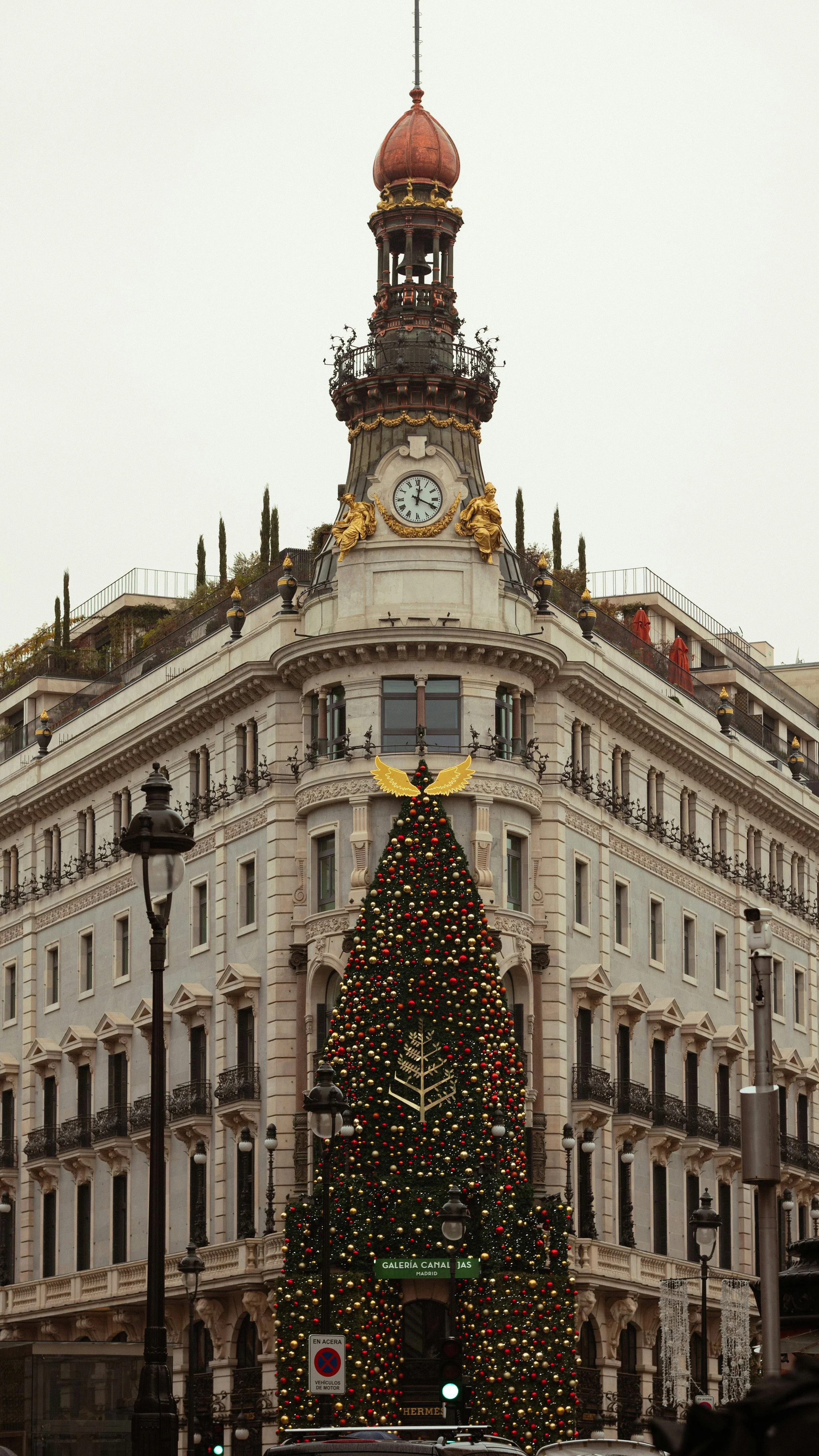
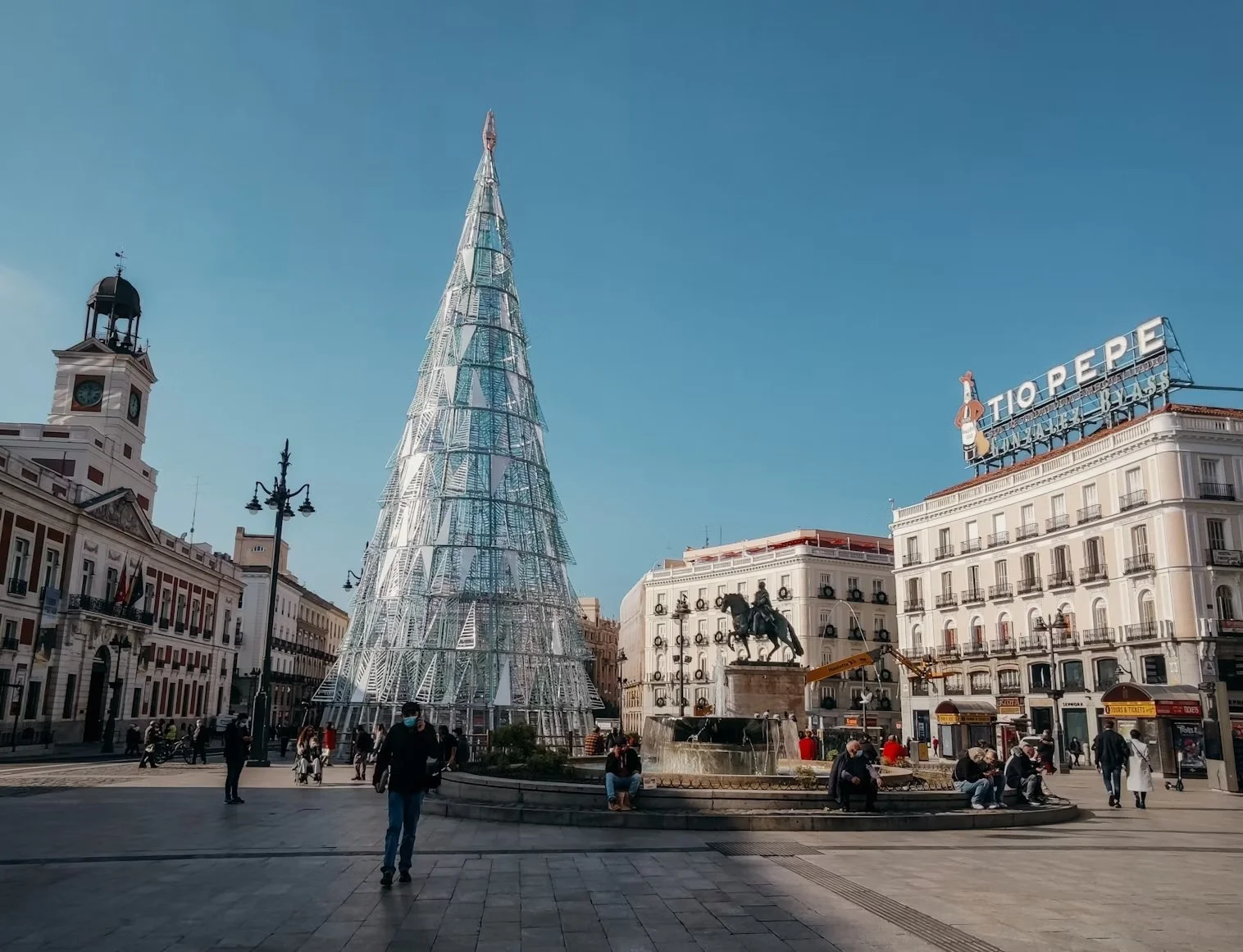
Madrid's holiday season runs longer than most, and it builds toward a different date entirely. Christmas lights go up across Gran Vía, Plaza Mayor, Puerta del Sol, and Plaza de España in late November and typically stay lit through the first days of January, timed to the city's biggest celebration rather than ending on December 25. Plaza Mayor hosts a Christmas market built around nativity figures, tree decorations, and seasonal sweets, running from late November through the end of December.
Madrid also has its own way of marking New Year's Eve. Thousands gather in Puerta del Sol to eat twelve grapes in time with the twelve chimes of the clock at midnight, a century-old tradition. But the real centerpiece of the season comes a few days later. On the evening of January 5, the Cabalgata de Reyes parade brings the Three Kings, Melchior, Gaspar, and Balthazar, through the city center on elaborate floats, tossing sweets to crowds along Paseo de la Castellana and Paseo de Recoletos before ending near Plaza de Cibeles with fireworks. The next morning, Día de Reyes, is when Spanish children traditionally open their gifts, and families sit down together to share roscón de Reyes, a ring-shaped cake studded with candied fruit.
KJT Final Take
Each of these cities does the holidays in its own way: London leans on decades of tradition, Paris lights up its grandest avenue, Munich and Vienna keep centuries-old markets running, and Madrid saves its biggest night for after Christmas.
At KJ Travel we can handle everything from recommending the best dates to travel, to booking your luxury hotel stay, to private transfers, exclusive holiday experiences, and everything in between, to make this holiday season your best one yet.
Ready to book your holiday vacay? We'd love to help! Get in touch with a KJ Travel advisor and let's make it happen!
FAQs ABOUT FESTIVE CITIES IN EUROPE
When does Hyde Park Winter Wonderland run in 2026? Hyde Park Winter Wonderland is confirmed for November 19, 2026 through January 3, 2027, open daily except Christmas Day.
When do the Munich and Vienna Christmas markets open in 2026? Munich's Marienplatz Christkindlmarkt runs November 20 to December 24, 2026. In Vienna, the Rathausplatz market runs from mid-November through December 26, 2026, and the Schönbrunn Palace market opens in early November and continues into early January as a scaled-back New Year's market.
What is Día de Reyes, and when is it celebrated in Madrid? Día de Reyes, or Three Kings Day, falls on January 6 and marks the day the Three Kings traditionally bring gifts to children in Spain. Madrid's Cabalgata de Reyes parade takes place the evening before, on January 5, and is the city's biggest holiday event.
Is early January still a good time to visit these cities? Yes, especially for Vienna's Schönbrunn market and Madrid, where the Reyes celebrations mean the city's holiday atmosphere runs into the second week of January, often with smaller crowds than the weeks before Christmas.