
Quick Take
The Dolomites are a UNESCO World Heritage mountain range in northern Italy, spanning South Tyrol, Trentino, and Veneto, with 18 peaks over 3,000 meters.
It has a genuinely different character in every season: skiing and gourmet mountain lunches in winter, hiking and cycling in summer, and a quieter, arguably more atmospheric window in early autumn.
It is not, however, open at full capacity every week of the year. Many five-star hotels and lifts close for a few weeks each spring (roughly April into May) and autumn (October into early December), so exact dates matter.
Standout luxury bases include Aman Rosa Alpina and La Perla in Alta Badia, Gardena Grödnerhof in Val Gardena, COMO Alpina Dolomites on the Alpe di Siusi plateau, and Ancora Cortina in Cortina d'Ampezzo, with Mandarin Oriental's first alpine resort now scheduled to open in Cortina in early 2027.
South Tyrol is one of Italy's most Michelin-dense regions: 21 starred restaurants and 25 stars total in the 2026 Guide.
UNESCO has described the Dolomites as among the most beautiful mountain landscapes in the world. And the appeal goes beyond the scenery, the Dolomites has a combination of: amazing luxury hotels, a great dining scene, real wellness culture, and a landscape that looks completely different depending on the month.
On her recent stay with her family, KJ Travel advisor Melissa saw this firsthand. She found the Dolomites feel like a different side of Italy than most repeat visitors know, with Austrian, German, and Ladin influences alongside the Italian ones.
Different in Every Season
The Dolomites earn their reputation as a year-round destination in the truest sense: each season brings a full, distinct experience rather than a lesser version of the one before it. Winter means skiing and lunch on snow-covered terraces at the rifugi. Summer brings wildflower meadows, hiking, and cycling. Early autumn, arguably the best-kept secret of the four, brings quiet trails, crisp air, and the region's harvest cuisine, along with the "enrosadira," the local Ladin term for the way the pale rock faces glow pink and red at sunset.
What the Dolomites are not is a destination that runs at full capacity every single week of the year. During the shoulder windows, roughly April into May and October into early December, a number of five-star hotels, mountain huts, and lifts close for a few weeks between seasons. Aman Rosa Alpina in San Cassiano, for example, typically closes from mid-October to early December before reopening for ski season. Ancora Cortina follows a similar pattern, with spring and autumn closures of its own. Melissa saw this firsthand in her early June family trip: trails, parking, and attractions were noticeably quieter than they'd be later in the summer, but some boutiques and restaurants in Cortina were still ramping up for the season. Her takeaway is that early June rewards travelers who prioritize quiet hiking over a full resort-town atmosphere.
None of this makes the destination less appealing. It just means the calendar deserves as much attention as the hotel list, which is one of the many details where planning with a travel advisor pays off.
Winter: Skiing With a Side of Gourmet Culture
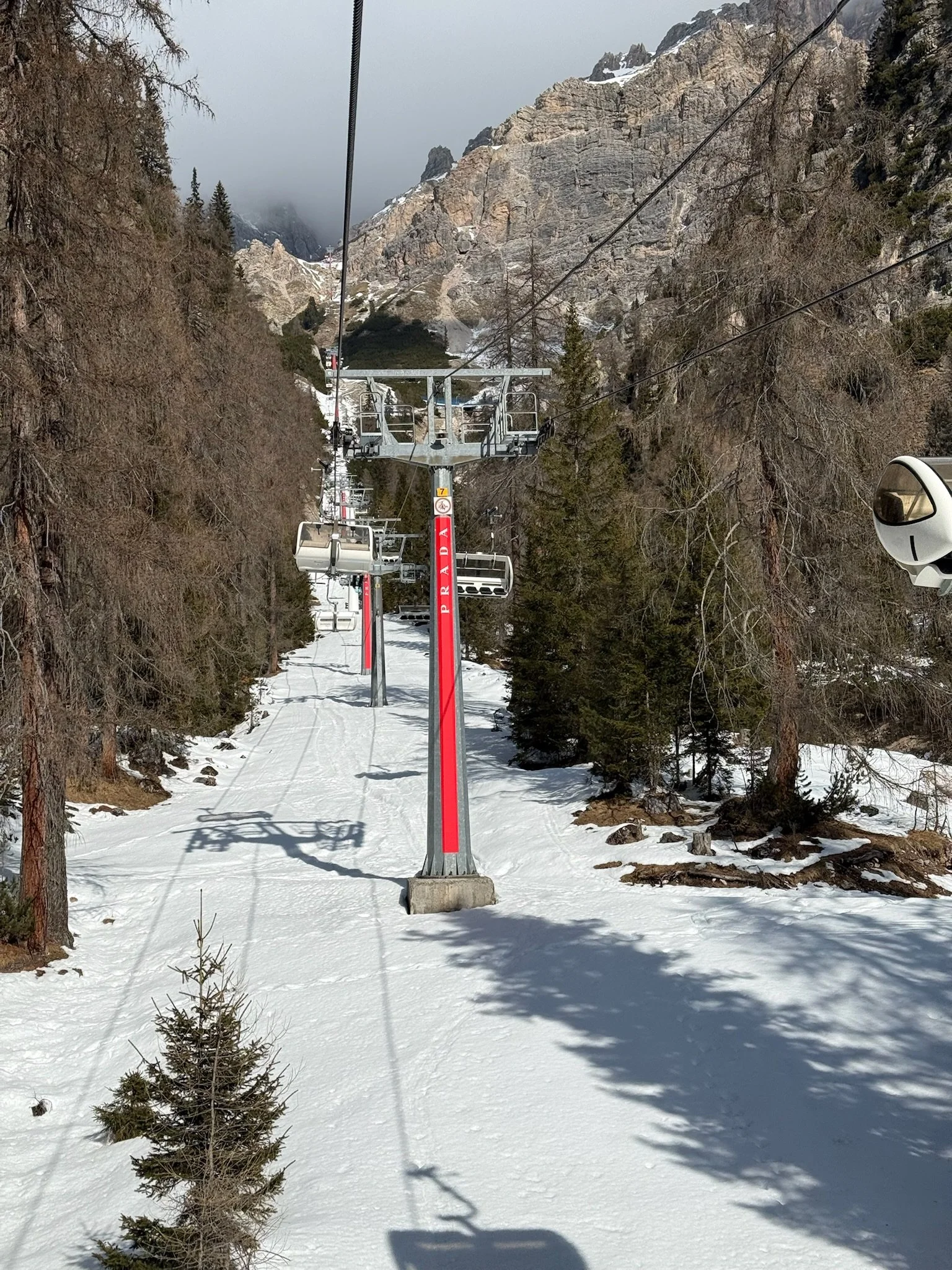
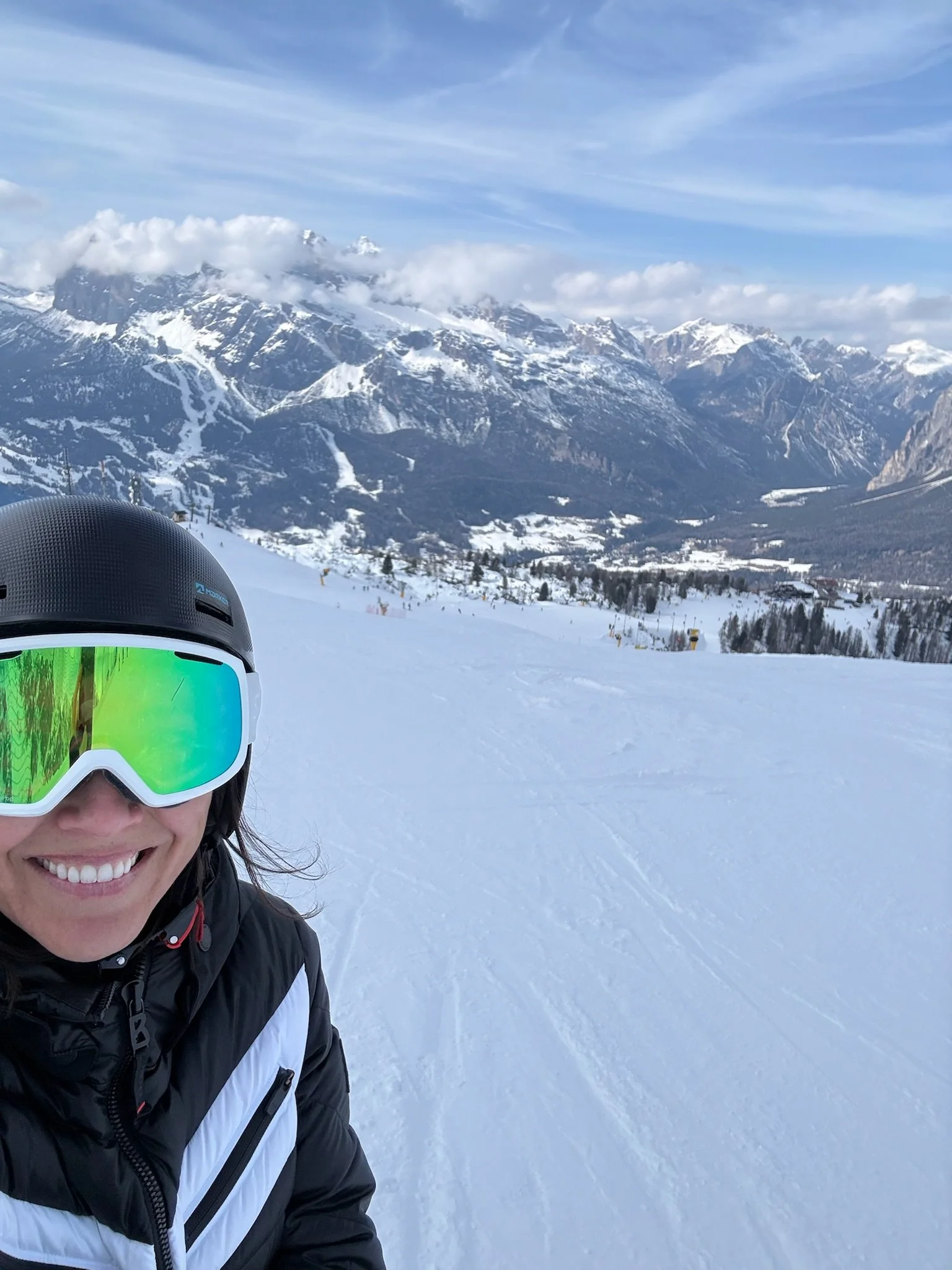
Winter is still the Dolomites' signature season, and for good reason. The Dolomiti Superski network connects 12 ski areas across roughly 1,200 kilometers of slopes and 450 lifts, all on a single pass, making it the largest interconnected ski area in the world.
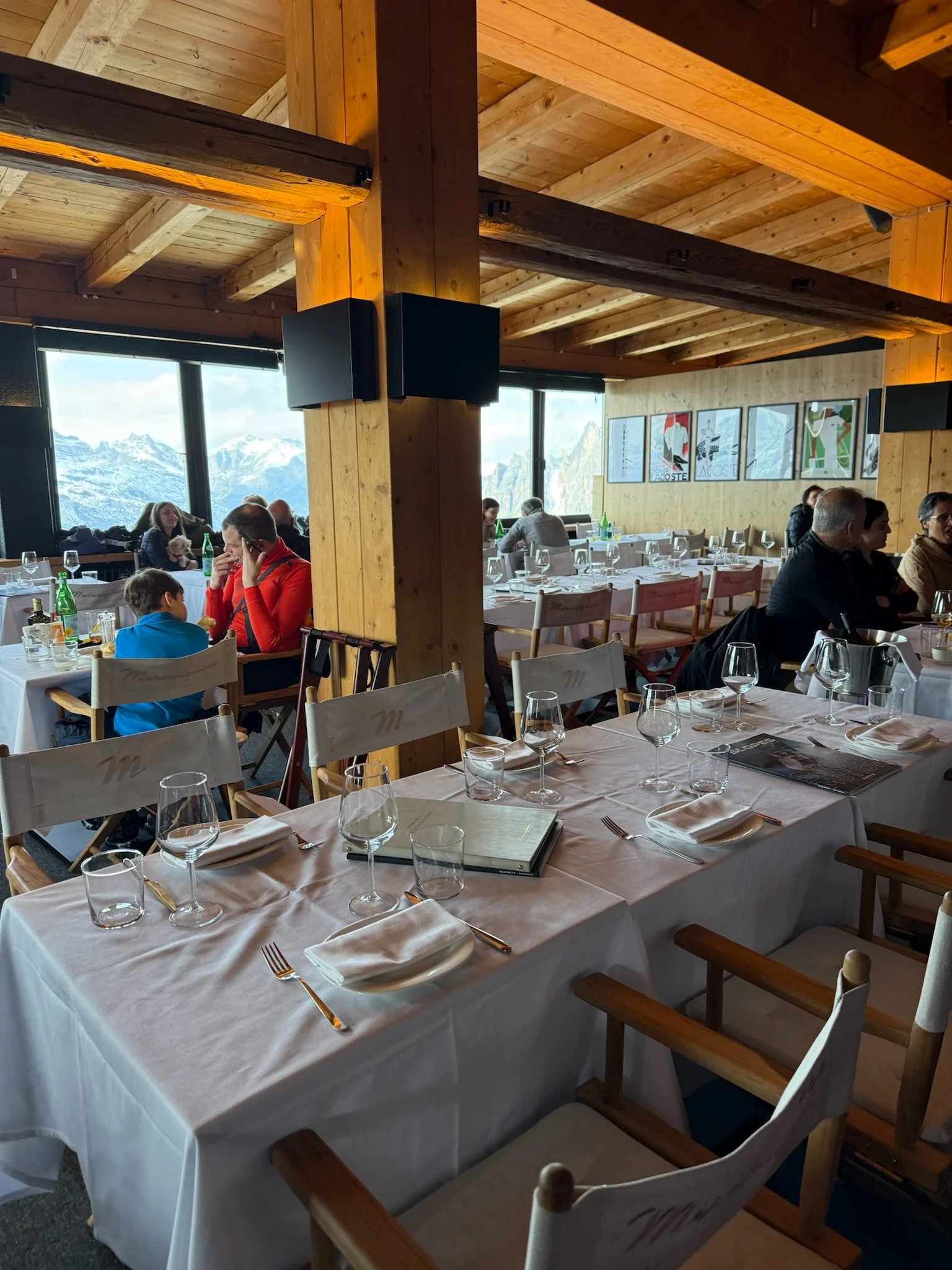
The luxury version of a Dolomites ski day looks different from a typical Alpine one, though. Alta Badia has built its identity around what its tourism board calls "gourmet skiing": chefs create dishes for mountain huts along the slopes, and entire days are built around a proper lunch rather than maximizing vertical feet. A well-planned day might run: a private instructor for a few runs on the Sellaronda circuit, a stop at a mountain hut for lunch, an easy ski home, then a spa afternoon and dinner. It's less about conquering the mountain and more about enjoying it properly.
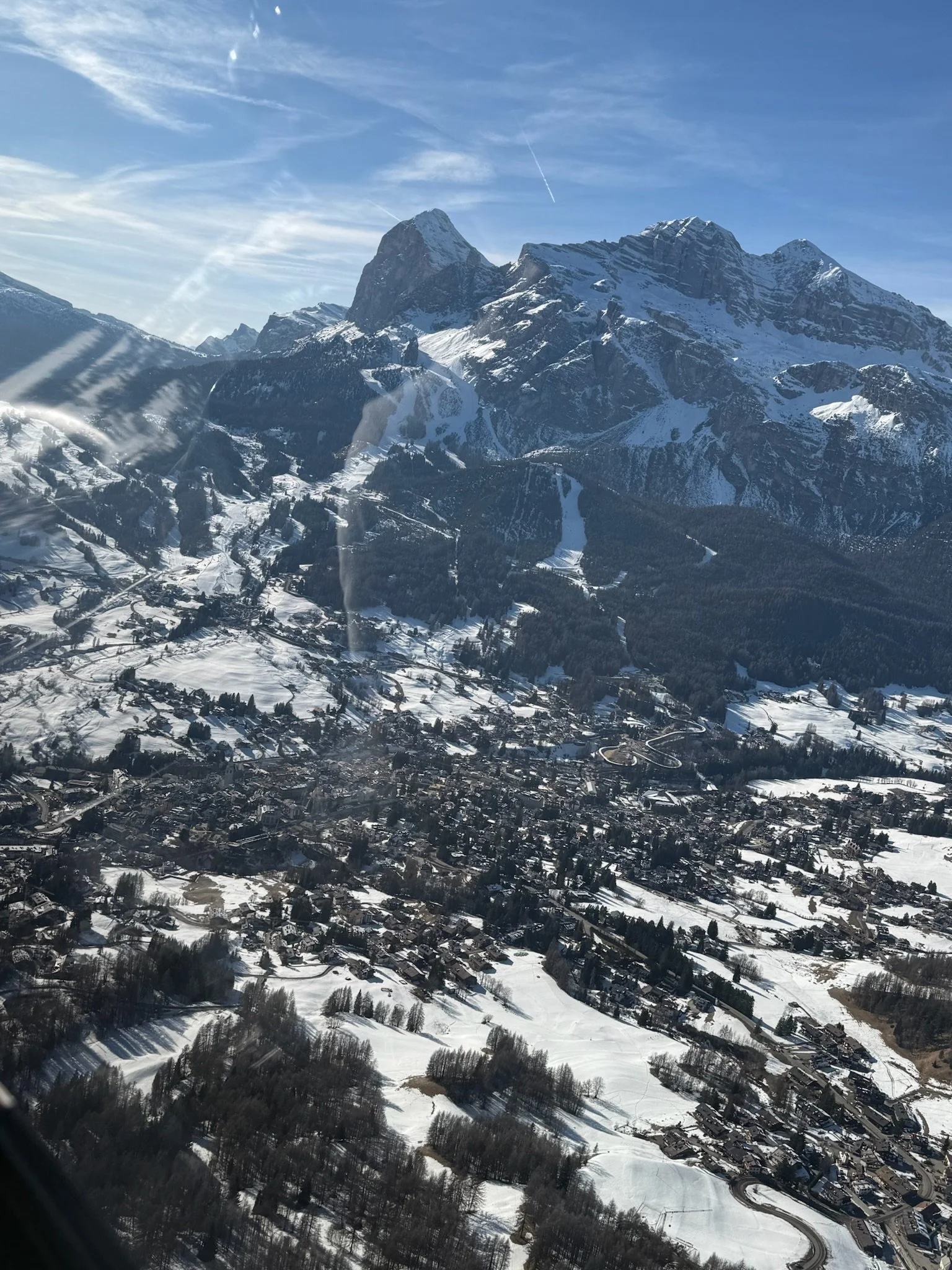
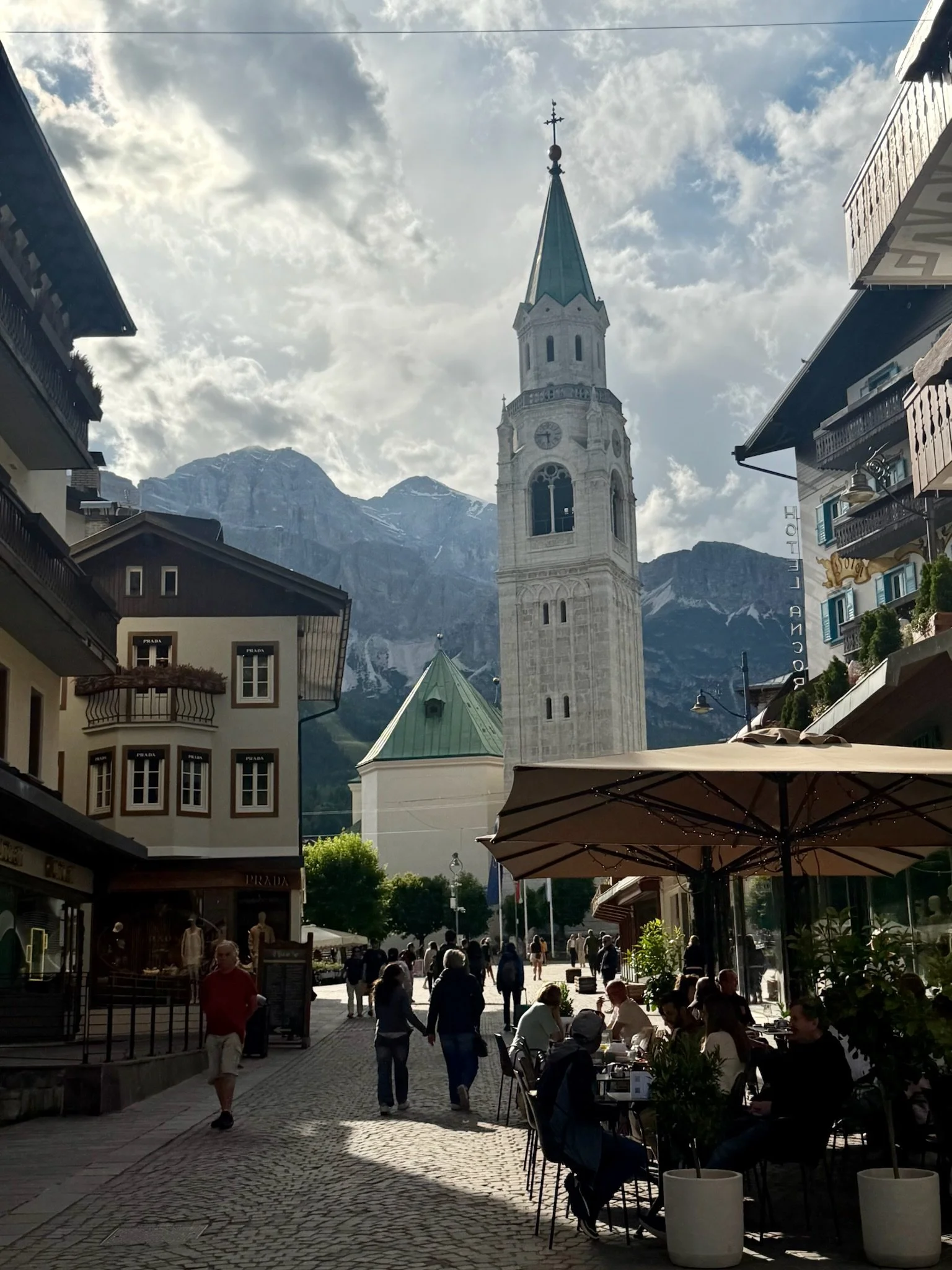
Cortina d'Ampezzo, one of Italy's glamorous mountain towns, offers a different personality entirely: 120 kilometers of local slopes plus a genuine town, with boutiques, restaurants, and an evening scene once the lifts close. That makes it a strong option for couples or families where not everyone wants to ski from first lift to last.
Summer and Early Autumn: The Season Still Underestimated
Once the snow melts, the Dolomites don't become a lesser version of themselves. They become an entirely different destination. Val Gardena alone maintains a trail network running into the hundreds of kilometers, and the wider region offers everything from gentle valley walks to multi-day, hut-to-hut routes.
The activity list is long: private guided hikes along dramatic ridgelines like Seceda, e-bike routes through alpine valleys, via ferrata with a certified mountain guide, horseback riding, golf and tennis around Cortina, and lunches at rifugi (mountain huts) reachable only on foot or by lift. On Melissa's trip, guides consistently flagged that crowds build sharply from mid-June into July at the region's best-known sights, worth building into any itinerary planned around peak summer dates.
Tre Cime di Lavaredo was, for Melissa, one of the standout hikes of the trip: otherworldly scenery she'd put on any not-to-miss list. The via ferrata outing ranked among the most memorable family activities of the week. A strong guide made the difference, and clipping in together as a family, working through the route and encouraging one another along the way, created a real sense of shared accomplishment, especially with teenagers along for it.
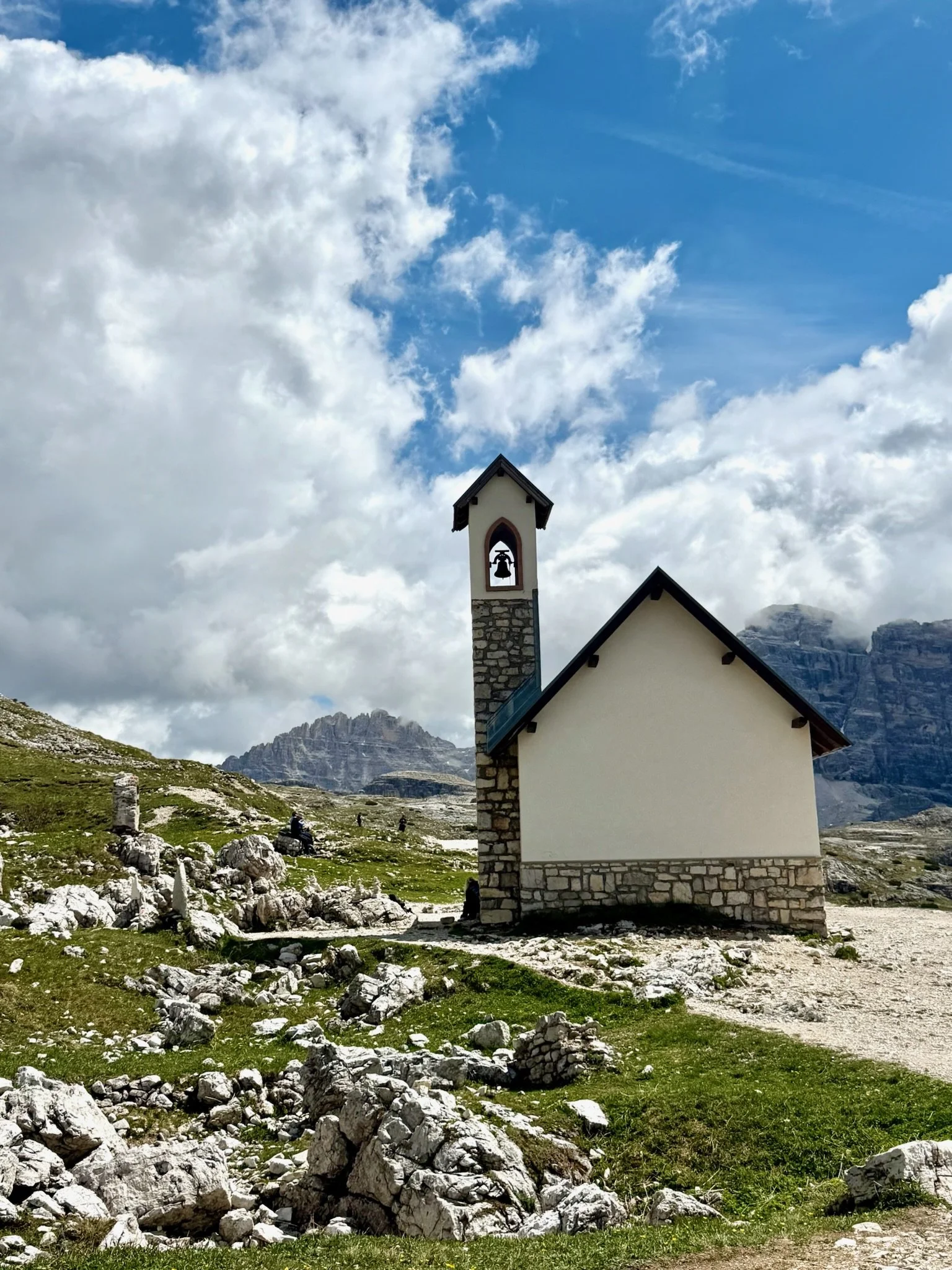
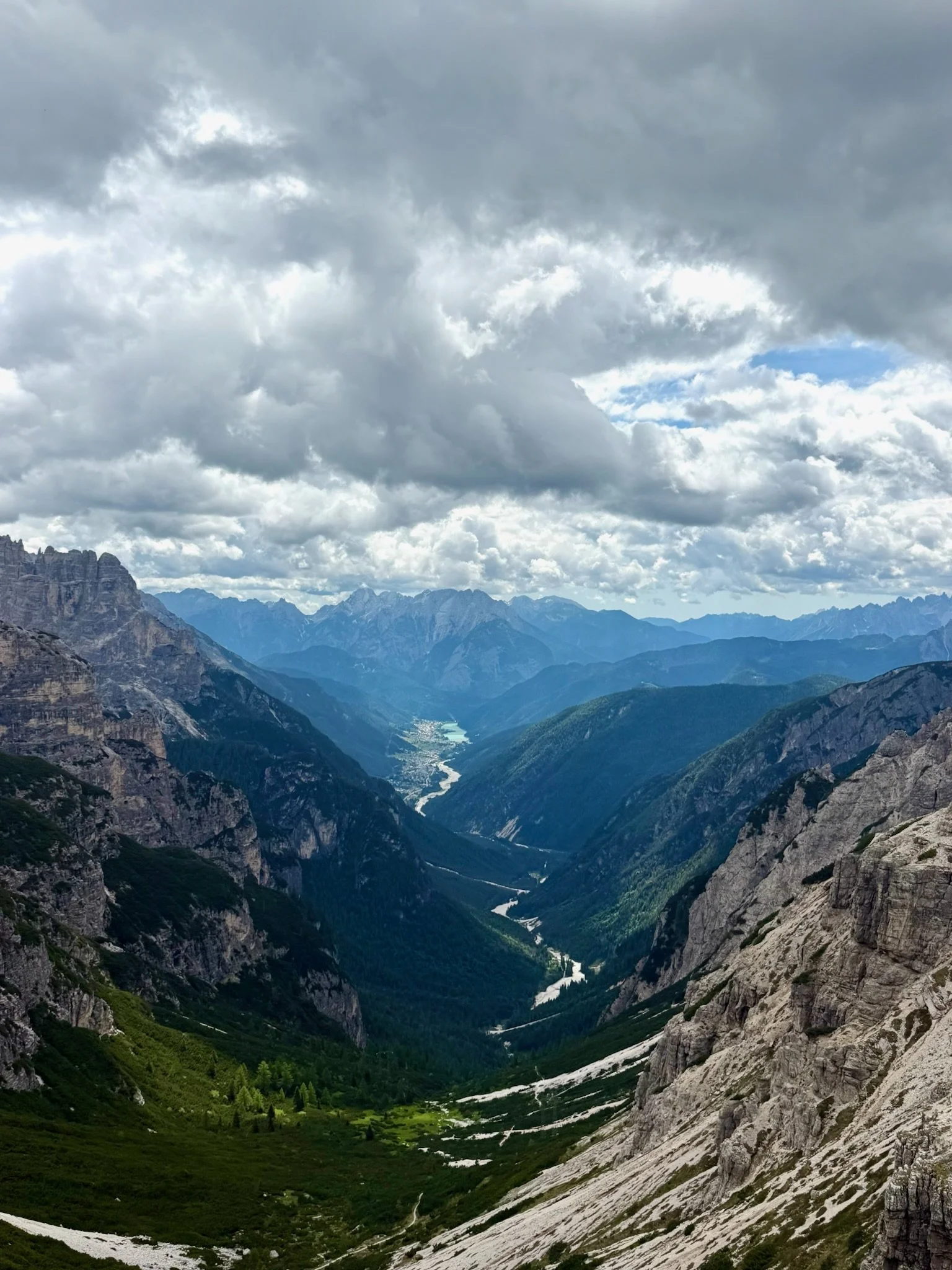
The rifugi lived up to their reputation, too. Melissa found that pairing a hike with a proper mountain lunch, rather than treating the meal as something to rush through before heading back to the hotel, is a big part of what makes summer in the Dolomites feel genuinely luxurious rather than simply active.
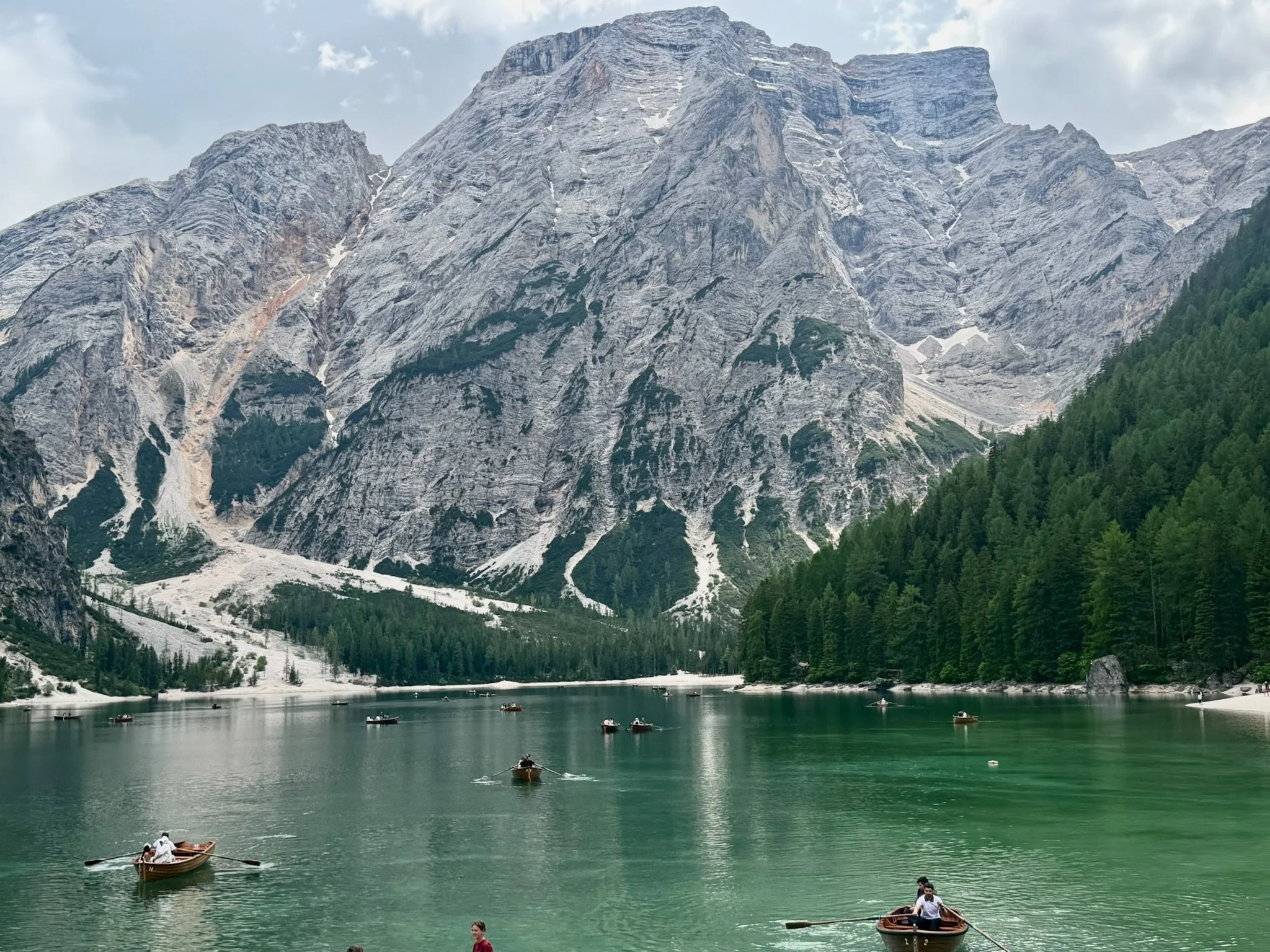
Lago di Braies deserves its own mention. Melissa described rowing one of the lake's traditional wooden boats in the early evening as one of the simplest, best moments of the trip, and during an early-June visit, access and parking were easy. Her advice for clients staying in Cortina, where the lake is roughly an hour away: the boat ride itself is short, so during the busiest weeks it's worth discussing timing with your travel advisor to decide whether an early or later visit makes more sense, rather than assuming a midday trip will be worth the drive.
Those kinds of details matter for a specific kind of traveler: multigenerational families and mixed-ability groups. One person can tackle a hike while another spends the morning at the spa, takes a scenic lift up, and meets everyone for lunch. Few mountain destinations offer that much flexibility without anyone feeling like they compromised.
Where to Stay: Four Very Different Bases
The Dolomites aren't one destination but several, and the valley matters as much as the hotel.
Alta Badia (San Cassiano and Corvara) suits a traveler who wants food, beautiful hotels, and sophisticated skiing or hiking in equal measure. Aman Rosa Alpina in San Cassiano reopened in July 2025 as a full Aman property following an extensive renovation: 51 rooms and suites, an expansive Aman Spa, and ski-butler service to the Piz Sorega lift. A few minutes away in Corvara, Hotel La Perla takes a different approach: deeply rooted in Ladin culture, home to a great wine cellar, and a member of Leading Hotels of the World, with its restaurant, La Stüa de Michil, holding a Michelin star.
Val Gardena (Ortisei and Selva) makes a strong first-time base thanks to its geography. From Ortisei, the Seceda ridgeline (2,519 meters) delivers one of the most photographed views in the range. Gardena Grödnerhof, a five-star Relais & Châteaux property, is one of the valley's most established addresses, and its restaurant, Anna Stuben, has held a Michelin star since 2025.
Alpe di Siusi is for a traveler who wants the mountain itself, not a resort town. COMO Alpina Dolomites sits directly on the plateau, pairing ski-in/ski-out winter access with COMO's Shambhala wellness philosophy and warm-season hiking, biking, and riding. It's the answer when someone wants breathtaking scenery and a great spa.
Cortina d'Ampezzo is the Dolomites for a traveler who still wants to feel like they're somewhere: boutiques, restaurants, and an evening out after a day on the mountain. The hotel scene here has moved fast. Ancora Cortina, an 1826 landmark on Corso Italia, reopened in 2025 under Aldo Melpignano's Egnazia hospitality group with 38 rooms and suites, a spa, and a private club. Melissa stayed there with her family and came away impressed: sophisticated interiors, excellent service throughout. She singled out the location as especially useful for families traveling with teenagers, who could walk into town on their own. Mandarin Oriental's first-ever alpine resort, Mandarin Oriental Cristallo, Cortina, is under construction nearby and now scheduled to open in early 2027, worth noting for anyone planning ahead rather than for this coming winter.
Melissa, who chose Cortina for a shorter family trip, sums up the trade-off well: a more secluded property wins on wellness, spa, and retreat atmosphere, while staying in Cortina itself wins on restaurants, shopping, and evening life within walking distance.
The FOod scene Is a Destination in Itself
This may be the Dolomites' single biggest differentiator from other luxury mountain regions. The food sits at a genuine crossroads of Italian, Austrian, and Ladin traditions, so a week here can move from handmade pasta and refined Italian plates to speck, mountain cheese, and traditional dumplings.
The numbers back up the reputation: the 2026 Michelin Guide lists 21 starred restaurants across South Tyrol carrying 25 stars total, placing the region among Italy's most Michelin-dense.
Melissa also counts a meal at SanBrite, a Michelin-starred, farm-to-table restaurant just outside Cortina, among the standout meals of her trip, and it's worth considering for any client based in or around town.
Getting There
There's no commercial airport inside the Dolomites. The three practical gateways are Venice Marco Polo Airport (best for Cortina and the eastern valleys, roughly two to two and a half hours by car), Innsbruck (closest by drive time to the northern and western valleys like Alta Badia and Val Gardena, though it typically requires a connection from the US), and Verona (best for western valleys like Val di Fassa, about two and a half to three hours). Private transfer is standard for this segment, and for good reason: the drive itself, particularly along mountain passes like the Pordoi and Falzarego, is part of the experience.
The KJ Travel Takeaway
The Dolomites reward a traveler willing to see them as more than a luxury ski destination: a UNESCO landscape, an increasingly luxury hotel scene, one of Italy's most concentrated culinary regions, and a completely different character depending on the month. Getting the season and the valley right, not just the hotel, is what separates a good Dolomites trip from a memorable one.
Melissa's own advice after her trip: don't underestimate how much time the region deserves. Between hiking, via ferrata, rifugi, lakes, villages, and hotels, ten days would go quickly, and she'd go back without hesitation.
Your Dolomites adventure is waiting! Get in touch with a KJ Travel advisor to start planning
FAQs about traveling to the Dolomites
Is the Dolomites open year-round for luxury travelers? It has a genuinely different, appealing character in every season, but not every hotel, restaurant, or lift runs 365 days a year. Many five-star properties close for a few weeks during the shoulder seasons, roughly April into May and October into early December, so it's worth confirming property-specific dates before booking a trip in those windows.
When is the best time to visit the Dolomites? Winter (December through March) is best for skiing and gourmet mountain culture. Summer (late June through September) is best for hiking, cycling, and wellness. Early autumn (September into early October) is a quieter, excellent alternative to summer. Late spring and late autumn are more limited, since many hotels and lifts close for seasonal transition.
What is Dolomiti Superski? Dolomiti Superski is a network of 12 ski areas across the Dolomites, connected by a single ski pass, covering roughly 1,200 kilometers of slopes and 450 lifts. It's the largest interconnected ski area in the world.
Where should luxury travelers stay in the Dolomites? It depends on the experience. Alta Badia (Aman Rosa Alpina, La Perla) suits travelers who want food and sophisticated skiing or hiking. Val Gardena (Gardena Grödnerhof) suits first-time visitors who want an iconic base with a real town nearby. Alpe di Siusi (COMO Alpina Dolomites) suits a quieter, wellness-focused stay. Cortina d'Ampezzo (Ancora Cortina, and Mandarin Oriental Cristallo from 2027) suits travelers who want boutiques and an evening scene alongside the mountains.
Is the Dolomites good for families or multigenerational trips? Yes, particularly in summer. The range of activity levels, from gentle valley walks and scenic lifts to serious via ferrata and multi-hour hikes, means a group can split up during the day by ability and reconvene for lunch, which works well for mixed-ability or multigenerational travelers.